
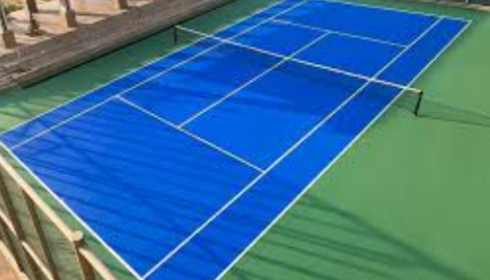
Building a tennis court looks straightforward on paper. A flat surface, proper markings, and a good-looking finish. But in reality, tennis court flooring is one of the most technically sensitive sports surfaces to construct. Small mistakes during planning, material selection, or installation can lead to cracking, poor bounce, waterlogging, or early resurfacing costs.
After years of working with tennis court construction, inspecting failed courts, and repairing surfaces across different climates, one thing is clear: most tennis court failures are avoidable. This guide highlights the most common mistakes people make—and how to avoid them before they affect performance, safety, and long-term cost.
1. Choosing the Wrong Tennis Court Surface Material
One of the biggest mistakes is selecting tennis court surface material based only on initial price. Not all materials behave the same way under heat, rain, and daily play. For example, asphalt tennis court construction without proper expansion planning often develops cracks faster in hot regions. Similarly, using low-grade acrylic coatings can cause fading, peeling, or slippery surfaces within a short period.
What to do instead: Choose tennis court material that is proven for your climate and usage level. Quality synthetic acrylic systems are designed to handle UV exposure, moisture, and repeated foot impact while maintaining consistent play characteristics.
2. Ignoring Base Quality During Tennis Court Construction
Many people focus only on the top surface and overlook the base. A weak or poorly cured base is the root cause of most flooring failures. Improper concrete mix, uneven compaction, or skipping curing time leads to cracks that no surface coating can permanently fix. This mistake significantly increases the tennis court construction cost in the long run due to repeated repairs.
What to do instead: A stable, well-leveled base with correct slopes for drainage is non-negotiable. Experienced tennis court builders always treat the base as the foundation of performance, not just structural support.
3. Underestimating Drainage and Slope Design
Water is the biggest enemy of tennis courts. Even premium materials will fail if water sits on the surface or seeps into the base. Poor drainage design results in algae growth, surface softening, and early need for tennis court resurfacing near me or tennis court repair near me searches—something no owner wants soon after installation.
What to do instead: Ensure proper slope (usually 1:100) and surface runoff planning during construction. Drainage should be designed before the first layer is applied, not treated as an afterthought.
4. Hiring Inexperienced Tennis Court Builders
Not all contractors claiming to build courts understand sports flooring. General civil contractors may offer lower quotes, but lack experience with surface texture, curing cycles, and layer compatibility. This often leads to inconsistent bounce, slippery play zones, or premature wear—forcing owners to look for tennis court installation near me or resurfacing solutions much earlier than expected.
What to do instead: Work with a specialized tennis court company or professional tennis court construction companies that understand sport-specific standards, not just civil execution.
5. Misjudging Tennis Court Construction Cost
A very common question is: “How much does it cost to build a tennis court?” The mistake lies in assuming there is a single fixed answer. The cost to build a tennis court depends on location, base type, surface system, cushioning, and long-term maintenance planning.
This confusion increases when people ask:
- How much to build a tennis court
- How much does it cost to build a tennis court? The cost to build a tennis court in the backyard.
Without understanding what’s included, many end up with low upfront costs and high repair expenses later.
What to do instead: Evaluate total lifecycle cost, not just installation price. A properly built court may cost more initially, but it saves significantly on tennis court resurfacing materials and repairs over time.
6. Using Incompatible Tennis Court Resurfacing Products
Resurfacing is inevitable, but using the wrong tennis court resurfacing products can damage the existing surface instead of restoring it. Applying incompatible coatings, skipping surface preparation, or using non-sport-grade materials often leads to delamination and uneven texture.
What to do instead: Always use system-compatible tennis court resurfacing materials recommended by experienced manufacturers. Resurfacing should extend court life, not shorten it.
7. Overlooking Backyard Tennis Court Challenges
Many homeowners interested in the cost to build a tennis court in the backyard underestimate space constraints, soil conditions, and drainage challenges. Unlike commercial projects, backyard courts require careful customization. Mistakes here often lead to uneven play areas or unexpected repair needs.
What to do instead: Plan backyard courts with the same seriousness as professional ones. Understand how to make a tennis court that fits the space while meeting performance and safety requirements.
8. Delaying Repairs Instead of Acting Early
Minor cracks, faded coatings, or loss of texture are early warning signs. Ignoring them only increases future tennis court construction costs. Early intervention through localized repairs or timely resurfacing avoids the need for full reconstruction.
What to do instead: Schedule periodic inspections and address small issues before they escalate. Preventive maintenance is always more cost-effective than rebuilding.
Why Top Flooring
Top Flooring focuses on delivering reliable tennis court flooring solutions using tested synthetic acrylic systems designed for Indian playing conditions. With practical experience in tennis court construction, resurfacing, and repairs, the team emphasizes correct base preparation, compatible tennis court materials, and long-term performance rather than shortcuts. This approach helps reduce unexpected tennis court construction costs, minimizes repair cycles, and ensures consistent play quality across residential, institutional, and backyard tennis court projects.
Final Thoughts
Whether you’re planning a new court or evaluating an existing one, avoiding these mistakes can save significant time, money, and frustration. High-performance tennis courts are not built by chance—they are the result of correct material selection, skilled installation, and long-term planning.
If you’re evaluating tennis court construction, resurfacing options, or understanding how much it costs to build a tennis court, always prioritize expertise over shortcuts. A well-built court rewards players with consistent performance and owners with long-term value.