
More Than Steel and Mechanics
Most people imagine surgery as a high-stakes drama — bright lights, tense silence, a team moving in perfect coordination. And yes, that part is real. But what rarely crosses anyone’s mind is how deeply surgery depends on the simplest things: small, carefully designed tools that quietly make complex procedures possible.
These tools aren’t flashy. They don’t hum or display digital screens. Yet they hold immense responsibility. In many ways, they represent the bridge between a surgeon’s expertise and a patient’s recovery.
If you look closely, you’ll notice something interesting. Surgery isn’t just about science — it’s about craftsmanship. It’s about human hands working with tools that feel almost like natural extensions of the body.
The Importance of Control in Surgical Work
Precision is everything inside an operating room. Even the smallest movement must be deliberate. A slight slip or hesitation can change outcomes, which is why surgical tools are designed with extraordinary attention to detail.
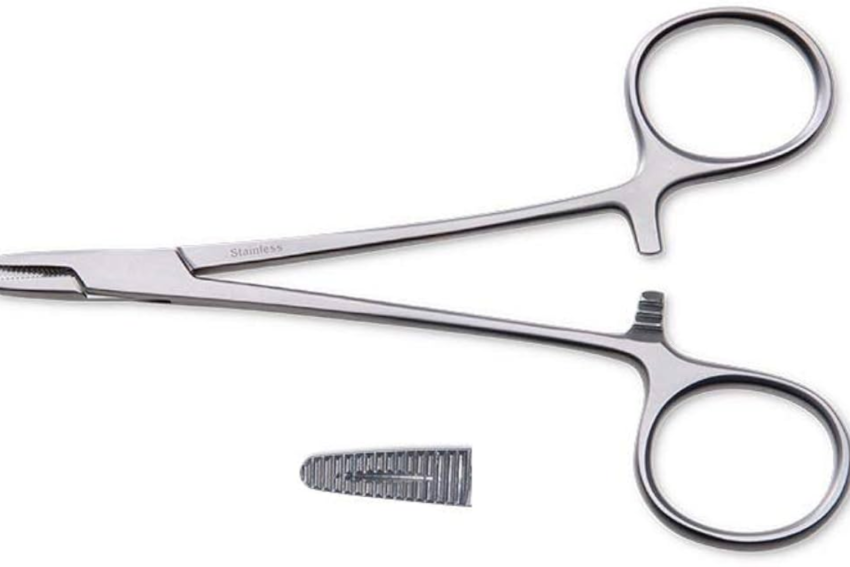
Take needle holders, for example. They might seem straightforward at first glance, but they play a vital role in suturing — the process of closing wounds after a procedure.
These instruments allow surgeons to grip delicate needles firmly without damaging them. Their locking mechanism ensures stability, while their balanced weight helps maintain steady hand movements during long operations.
What’s fascinating is how much these tools influence surgical rhythm. Suturing isn’t just a technical step — it’s almost like a careful, controlled dance. Every stitch requires precision, patience, and a reliable tool that won’t falter under pressure.
Without dependable needle holders, even highly skilled surgeons would struggle to achieve the same consistency.
Stopping Bleeding, Saving Time
Another essential category of surgical tools focuses on controlling bleeding — one of the most critical aspects of any operation.
This is where hemostats come into play.
These clamp-like instruments are designed to grip blood vessels and temporarily stop blood flow during procedures. Their function might sound simple, but their impact is enormous. Effective bleeding control improves visibility for surgeons, reduces risks for patients, and helps maintain overall stability during surgery.
Hemostats are also incredibly versatile. They can hold tissue, secure sutures, and even assist in delicate dissections. Over time, surgeons often develop a strong familiarity with specific types, choosing tools that feel comfortable and respond predictably in their hands.
It’s interesting to think about how such a small instrument can influence the entire pace of an operation. By controlling bleeding efficiently, hemostats help create a safer, more controlled surgical environment.
Gripping with Precision and Care
Not all surgical tasks involve cutting or clamping. Many require careful handling of tissues — holding, moving, or stabilizing delicate structures without causing damage.
That’s where surgical graspers become indispensable.
These tools are designed to provide a secure grip while minimizing trauma to the tissues they hold. Their tips often feature specialized designs — some smooth for gentle handling, others textured for stronger grip when needed.
Graspers are particularly important in minimally invasive procedures, where surgeons operate through tiny incisions using long, slender instruments. In such cases, the ability to control movement precisely becomes even more crucial.
What makes these tools remarkable is their ability to combine strength with sensitivity. They allow surgeons to manipulate tissues confidently while maintaining a level of care that supports faster healing afterward.
The Human Relationship with Surgical Tools
One aspect that rarely gets discussed outside medical circles is the emotional connection surgeons develop with their instruments.
Over years of practice, they become intimately familiar with how each tool behaves — how much pressure to apply, how it feels during delicate tasks, how it responds under stress.
There’s a certain comfort in this familiarity. During complex procedures, surgeons rely not just on their knowledge but also on their trust in the tools they use.
It’s a relationship built on reliability. When every second counts, there’s no room for uncertainty. Tools must perform exactly as expected, every single time.
Behind this reliability lies an entire system of quality control, sterilization, and maintenance. Technicians ensure instruments remain sharp, clean, and functional, contributing to a chain of care that extends far beyond the operating room.
Why Simple Tools Still Matter in a High-Tech Era
In an age of robotic surgery and advanced imaging systems, it might seem surprising that manual surgical instruments remain so essential.
But the reason is simple: they provide direct tactile feedback. Surgeons can feel resistance, texture, and subtle changes in tissue — information that no machine can fully replicate.
These tools also offer unmatched reliability. They don’t depend on software, electricity, or complex calibration. Properly maintained, they can function flawlessly for years.
Even as technology continues to advance, manual instruments remain at the core of surgical practice. They represent a timeless balance between human skill and mechanical precision.
Looking Toward the Future
The future of surgical tools will likely blend tradition with innovation. Manufacturers are exploring new materials that reduce weight while increasing durability. Ergonomic designs aim to minimize fatigue during long procedures.
Some instruments may incorporate subtle technological enhancements, such as improved grip coatings or integrated sensors that provide feedback during surgery.
Yet despite these developments, the fundamental purpose of surgical tools remains unchanged — supporting precision, safety, and effective patient care.
A Quiet Yet Powerful Contribution
For patients, surgery is often remembered as a turning point — the moment that led to healing or recovery. They rarely think about the tools involved.
But behind every successful operation lies a carefully orchestrated system of instruments working quietly and reliably.
These tools don’t demand attention, yet their role is profound. They help transform medical knowledge into practical action, enabling surgeons to perform with confidence and care.