You don’t usually think much about water when everything seems normal. You turn on the shower, fill a glass at the kitchen sink, or start a load of laundry and get on with your day. But when the water suddenly smells strange, leaves reddish marks around the fixtures, or makes soap feel almost useless, it’s hard not to notice. Even a small change can raise a lot of questions, especially when you aren’t sure whether it’s a harmless nuisance or something that needs attention.
The good news is that many household water problems have identifiable causes and practical solutions. The trick is not to guess too quickly. Water can look clear and still contain substances worth testing, while an unpleasant smell or stain doesn’t automatically mean the supply is dangerous. Understanding what you’re seeing, and knowing when to seek help, is the best place to begin.
Start by Paying Attention to What Has Changed
Water problems rarely announce themselves with a neat explanation. You might notice an unusual smell only when running hot water, or find that the bathroom sink develops stains while the kitchen tap appears fine. Perhaps the water looks cloudy for a few seconds before clearing. These details can help narrow down possible causes.
Think about when the issue began. Did it appear after plumbing work, a period of heavy rain, a change in the municipal supply, or a long spell when a tap wasn’t used? Does it affect every faucet or just one? Is the problem constant, or does it come and go?
A few observations can be useful, but they cannot replace testing when safety is a concern. If the water develops a sudden, strong chemical or sewage-like smell, unusual discoloration, or other worrying changes, avoid drinking it until you’ve checked with your water provider or the relevant local health authority. Private-well owners may need to arrange appropriate testing rather than relying on appearance alone.
What Could Be Behind an Unpleasant Smell?
Few things make people hesitate faster than smelly water coming from a tap. The cause isn’t always obvious, and different smells can point toward different issues. A rotten-egg odour may be associated with hydrogen sulfide, certain bacteria, or reactions occurring in plumbing or water-heating equipment. A chlorine-like smell may relate to disinfection, while a musty or earthy odour can have other environmental or supply-related causes.
Pay attention to whether the smell comes from hot water, cold water, or both. If only the hot water smells unusual, the water heater may deserve inspection. If the odour occurs at every tap, the issue could be connected to the incoming supply or the plumbing system. A smell confined to one fixture may suggest a local drain or plumbing problem rather than the water itself.
That distinction matters because treating the wrong thing can waste time and money. Pouring a cleaning product down a drain, for example, won’t solve a problem originating in the water supply. Likewise, installing a filter without identifying the cause may not improve the smell at all.
A water test or plumbing inspection can help establish what’s happening. The appropriate response depends on the source, the substances involved, and whether the problem affects water safety or simply its taste and smell.
Why Hard Water Leaves So Many Marks
If you regularly scrub white deposits from faucets, shower doors, or glassware, you may be dealing with hard water. This condition occurs when water contains elevated levels of dissolved minerals, particularly calcium and magnesium. These minerals are naturally present in many groundwater sources, and their concentration varies by location.
As water evaporates, the minerals can remain behind as a chalky residue. They may also build up inside pipes, water heaters, and appliances over time. You might notice spots on dishes, stiff towels, or soap that doesn’t lather as easily as expected. None of these signs alone tells you the exact hardness level, but together they can justify testing.
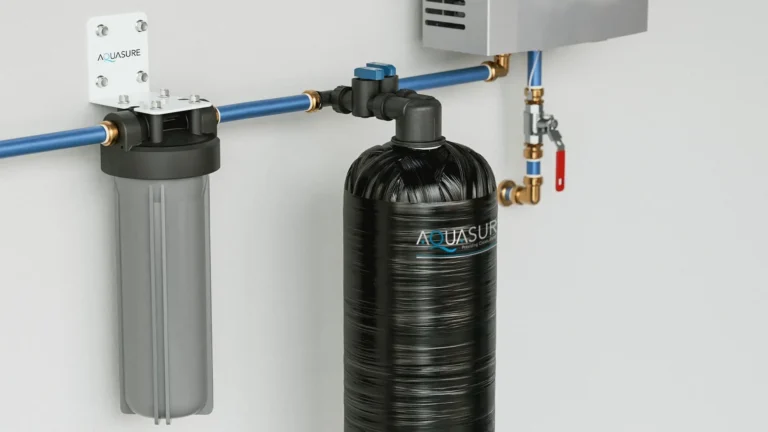
A water softener is one common option for reducing hardness. Most conventional softeners use an ion-exchange process that removes calcium and magnesium and replaces them with sodium or potassium ions. By lowering hardness, the system can help reduce scale buildup and make cleaning easier.
Still, a softener isn’t a universal purifier. It doesn’t automatically remove bacteria, pesticides, or every dissolved contaminant. The decision to install one should be based on your water conditions and household preferences. In some homes, a simpler solution may be sufficient; in others, treating the incoming supply can help protect plumbing and equipment over the long term.
Understanding Iron Stains and Rust-Coloured Water
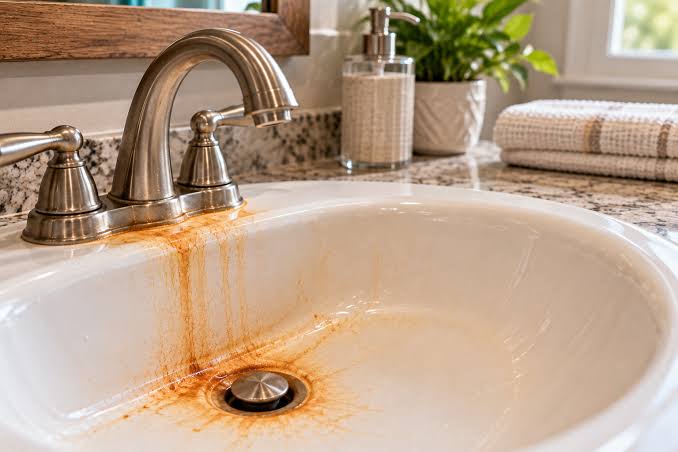
Reddish-brown streaks around sinks, toilets, and bathtubs are frustrating, particularly when you have just cleaned the bathroom. In some cases, iron & rust are responsible. Iron can occur naturally in groundwater, while corrosion inside older pipes or plumbing components can introduce rust particles into the water.
The pattern of staining can offer a clue. If several fixtures develop similar marks, the source may be related to the incoming water. If the problem appears only at one tap, local plumbing could be involved. Rust-coloured water after maintenance or a supply interruption may also warrant checking with the water utility.
Iron is not always a health concern at the levels commonly associated with staining, but its presence can affect taste, appearance, laundry, and plumbing. The right treatment depends on the form of iron and its concentration. Some systems use filtration or oxidation followed by filtration, while other situations require a different approach. A simple sediment cartridge may capture visible particles but won’t necessarily remove dissolved iron effectively.
Testing is particularly useful here because treatment equipment needs to match the actual water chemistry. Before purchasing a filter, find out whether the iron is dissolved, particulate, or present alongside other substances that may affect performance.
Choose a Solution Based on Evidence, Not Guesswork
Water treatment products are designed for different purposes. Carbon filters may reduce certain tastes and odours, softeners address hardness minerals, and specialised iron-removal systems can target particular forms of iron. Reverse osmosis may reduce many dissolved substances when the unit is properly selected and maintained.
The important word is may. Performance depends on the system, the water conditions, and the contaminant in question. Look for credible performance data and relevant independent certifications, especially when the concern involves drinking-water safety. If testing identifies a health-related contaminant, follow guidance from a qualified laboratory, public health authority, or water professional.
Remember to account for maintenance as well. Filters need replacing, softeners may require salt, and some systems need periodic cleaning or servicing. A treatment unit that is neglected can lose effectiveness, so ask about ongoing costs before making a commitment.
Keep an Eye on Your Water Over Time
Once a problem has been addressed, don’t assume the water will remain exactly the same forever. Municipal supplies can change, plumbing can deteriorate, and private wells may be affected by weather or nearby land use. Periodic testing, appropriate maintenance, and attention to unusual changes can help you catch problems earlier.
Water should be one of the simpler parts of daily life. When it starts smelling odd, leaving stains, or creating stubborn mineral deposits, there’s usually a reason worth investigating. Rather than rushing into an expensive purchase, take a little time to identify the cause, check the available evidence, and choose a solution that fits your home.
A careful approach may not feel as quick as buying the first product you find, but it is far more likely to give you lasting results—and a little peace of mind every time you turn on the tap.